
Reliable Construction & Contracting Services for Successful Projects
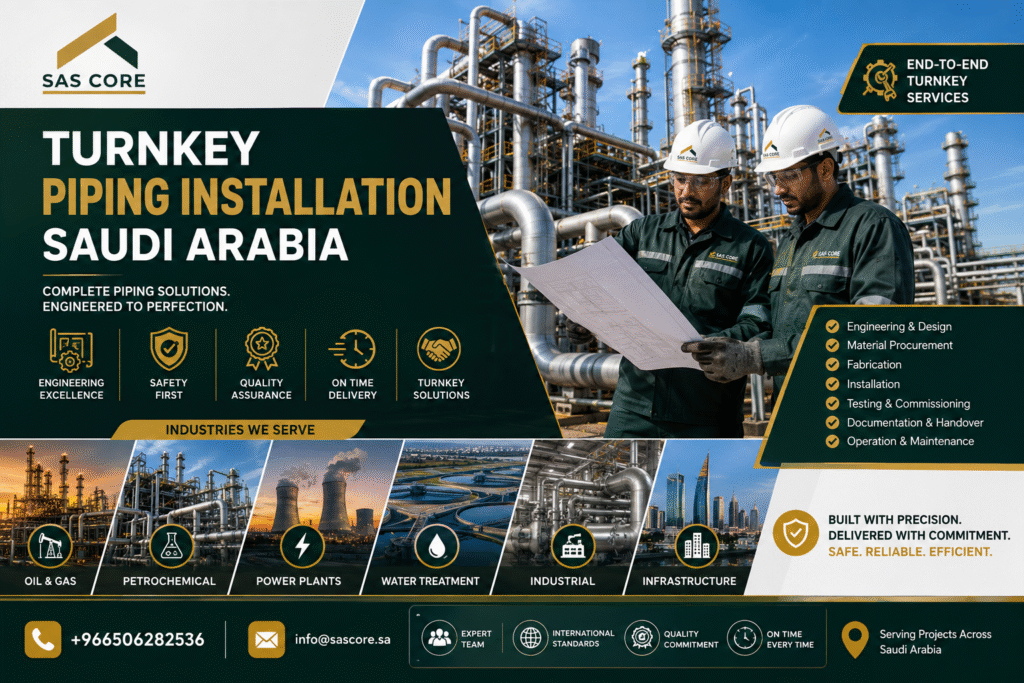
Construction & Contracting Services Construction & Contracting Services in Saudi Arabia Reliable construction projects require experienced professionals, proper planning, skilled manpower, technical expertise, quality control, and effective project coordination. SAS Core provides professional construction and contracting solutions for industrial, commercial, and infrastructure projects across Saudi Arabia. Professional Construction & Contracting Services Construction projects involve multiple stages, including planning, procurement, manpower coordination, site execution, supervision, quality inspection, and project completion. Working with an experienced construction contractor can help businesses manage these activities in a more structured and efficient manner. SAS Core delivers construction and contracting services in Saudi Arabia with a focus on professional execution, technical coordination, quality, and project requirements. Our capabilities support clients across different industrial and infrastructure applications. For projects that require long-term operational support after construction, SAS Core also provides Operation & Maintenance (O&M) services to support ongoing facility and industrial requirements. Why Professional Construction Contractors Matter A construction project requires coordination between engineers, supervisors, contractors, subcontractors, suppliers, and skilled workers. Without proper planning and communication, projects can experience delays, resource issues, quality concerns, and increased costs. An experienced construction company in Saudi Arabia can help coordinate project activities while maintaining focus on scope, schedule, resources, quality, and safety requirements. Detailed project planning and scheduling Professional site supervision Skilled manpower coordination Material and resource management Quality control and inspection Project progress monitoring Subcontractor coordination Technical and engineering support Integrated Construction & Contracting Solutions Modern industrial and infrastructure projects often require multiple technical disciplines to work together. Construction, engineering, mechanical, piping, HVAC, manpower, and maintenance activities may all be connected within the same project lifecycle. SAS Core provides core contracting services designed to support project execution and coordination across different construction and industrial requirements. Specialized project requirements involving piping, HVAC systems, ducting, insulation, and cladding can also be supported through our piping, HVAC, ducting and cladding services . Our Approach to Construction Projects Every construction project has different objectives, technical requirements, timelines, and resource needs. SAS Core follows a structured approach to help ensure that project activities remain organized from planning through execution. 01 Project Planning Project scope, technical requirements, schedules, resources, manpower, materials, and execution requirements are reviewed before work begins. 02 Resource & Manpower Coordination Appropriate workforce and technical resources are coordinated according to the project’s requirements and different stages of execution. 03 Site Execution & Supervision Construction activities are monitored and coordinated to maintain alignment with project specifications, schedules, and execution plans. 04 Quality & Progress Monitoring Quality checks, progress monitoring, documentation, and coordination help identify potential issues and maintain project visibility. Engineering & Technical Support for Construction Engineering coordination plays an important role in industrial and infrastructure projects. Technical planning, documentation, site coordination, engineering resources, and specialized expertise can help ensure that project activities follow the required specifications. SAS Core provides engineering and technical support services for projects requiring professional engineering assistance, technical resources, and project coordination. Combining construction execution with engineering support can help project stakeholders maintain better coordination between technical planning and on-site activities. Mechanical & Piping Construction Services Mechanical and piping systems are essential components of many industrial projects. Proper installation, technical coordination, inspection, and supervision are important for maintaining system performance and project requirements. SAS Core provides specialized mechanical and piping services in Saudi Arabia for industrial and project-based requirements. These services can support projects involving industrial piping systems, mechanical installations, and related technical requirements. Commercial & Industrial Construction Solutions Commercial and industrial construction projects often require detailed coordination because they involve multiple trades, technical specifications, workforce requirements, safety considerations, and project deadlines. Professional construction services can support offices, commercial facilities, industrial facilities, warehouses, infrastructure projects, and other construction requirements. Depending on project scope, industrial construction may involve civil, mechanical, electrical, piping, HVAC, instrumentation, planning, procurement, and quality control activities. Quality, Safety & Compliance Quality and safety are important throughout the construction lifecycle. Proper site procedures, workforce coordination, inspection, documentation, and adherence to applicable project requirements help create a controlled working environment. Construction teams should maintain clear communication between supervisors, contractors, workers, engineers, and project stakeholders. Regular monitoring can help identify potential issues before they affect project progress. Why Choose SAS Core for Construction & Contracting? SAS Core combines construction, contracting, engineering, technical support, mechanical, piping, HVAC, and maintenance capabilities to provide project-focused solutions for clients in Saudi Arabia. 01 Technical Expertise Professional technical resources support construction and industrial requirements across multiple disciplines. 02 Integrated Solutions Construction, contracting, engineering, piping, HVAC, and maintenance capabilities can be coordinated according to project needs. 03 Project Coordination Structured planning and coordination help maintain better visibility across manpower, resources, schedules, and site activities. 04 Saudi Arabia Focus SAS Core provides construction and industrial support for project requirements across Saudi Arabia. Operation & Maintenance After Project Completion Construction is only one stage of an asset’s lifecycle. Once a facility or industrial system becomes operational, regular inspection, maintenance, troubleshooting, and technical support can help maintain operational reliability. Businesses looking for continued technical support can explore SAS Core’s Operation & Maintenance (O&M) services , which support ongoing facility and industrial maintenance requirements. Build Your Next Project with SAS Core Whether your requirement involves construction contracting, engineering support, mechanical and piping installation, HVAC and ducting, or long-term operation and maintenance, SAS Core provides project-focused solutions for industrial and infrastructure requirements. Explore Contracting Services Engineering & Technical Support Mechanical & Piping Services O&M Services Frequently Asked Questions About Construction & Contracting What are construction and contracting services? Construction and contracting services include project planning, construction execution, site supervision, manpower coordination, material management, quality control, technical support, and project management activities required to complete construction projects. How do I choose a construction contractor in Saudi Arabia? Consider the contractor’s relevant experience, technical capabilities, workforce, project management process, quality procedures, safety practices, communication, and ability to meet the project’s scope and schedule. What does a construction contractor do? A construction contractor coordinates construction activities, workforce, materials, subcontractors, site execution, supervision, and project requirements according to the agreed scope of work.
Why Oil and Gas Pipeline Safety Procurement Is Important
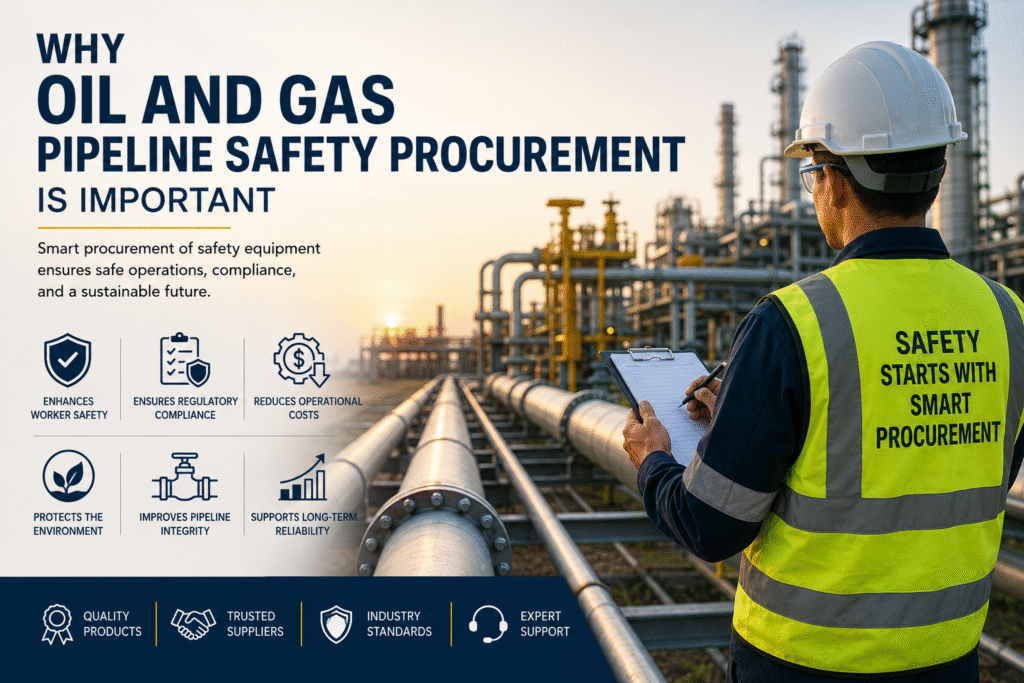
The oil and gas industry is one of the most demanding sectors in the world, where safety, reliability, and operational efficiency are non-negotiable. Pipelines transport millions of barrels of oil and vast quantities of natural gas every day, making them critical assets that require continuous monitoring and protection. This is where oil and gas pipeline safety procurement becomes an essential part of every successful energy project. Procurement is more than simply purchasing equipment. It involves selecting certified products, trusted suppliers, and advanced safety technologies that help maintain pipeline integrity while reducing operational risks. A well-planned procurement strategy ensures that every component meets industry standards and performs reliably under challenging conditions. Understanding Oil and Gas Pipeline Safety Procurement Oil and gas pipeline safety procurement refers to the process of sourcing, evaluating, and purchasing safety-related equipment, materials, and services required to protect pipeline infrastructure. These may include: Selecting the right products from reliable suppliers helps companies minimize risks while ensuring uninterrupted operations. Why Oil and Gas Pipeline Safety Procurement Is Important 1. Prevents Pipeline Failures Pipelines operate under high pressure and often in harsh environmental conditions. Poor-quality components can lead to leaks, ruptures, and costly accidents. Investing in certified safety equipment significantly reduces the risk of mechanical failure. 2. Protects Human Lives Safety should always be the highest priority in oil and gas operations. Proper procurement ensures that workers have access to reliable protective equipment and emergency safety systems, reducing workplace injuries and improving overall operational safety. 3. Ensures Regulatory Compliance Government agencies and international organizations have strict safety standards for pipeline operations. Procuring approved and certified equipment helps companies comply with these regulations while avoiding legal penalties and project delays. 4. Reduces Environmental Risks Pipeline leaks can cause severe environmental damage, affecting ecosystems, water sources, and nearby communities. Modern leak detection systems and corrosion-resistant materials help identify potential problems before they become environmental disasters. 5. Improves Operational Efficiency Reliable safety equipment minimizes unexpected downtime and maintenance costs. When pipelines operate efficiently, companies can maintain consistent production and improve overall business performance. 6. Extends Pipeline Life High-quality materials and protective systems increase the lifespan of pipeline infrastructure by reducing corrosion, wear, and mechanical damage. This lowers long-term replacement costs and improves return on investment. 7. Supports Risk Management Every oil and gas operation involves potential risks. Effective procurement strategies help companies identify suitable safety solutions that reduce operational hazards and improve emergency preparedness. Essential Components of Pipeline Safety Procurement An effective procurement strategy should include: Benefits of Choosing Reliable Procurement Partners Working with experienced procurement suppliers offers several advantages: Best Practices for Oil and Gas Pipeline Safety Procurement To maximize safety and operational performance, companies should: Future Trends in Pipeline Safety Procurement Technology continues to transform the oil and gas industry. Some emerging trends include: These innovations improve safety while reducing operational costs and enhancing overall efficiency. Conclusion Oil and gas pipeline safety procurement is a critical investment that directly impacts operational safety, regulatory compliance, environmental protection, and business profitability. By sourcing high-quality safety equipment from trusted suppliers, organizations can reduce risks, improve efficiency, and extend the lifespan of valuable pipeline infrastructure. As the energy industry continues to evolve, adopting a strategic procurement approach will remain essential for maintaining safe, reliable, and sustainable pipeline operations. Frequently Asked Questions (FAQs) 1. What is oil and gas pipeline safety procurement? Oil and gas pipeline safety procurement is the process of sourcing and purchasing certified safety equipment, monitoring systems, and protective technologies used to ensure safe pipeline operations. 2. Why is pipeline safety procurement important? It helps prevent accidents, protects employees, ensures regulatory compliance, reduces environmental risks, and improves the reliability of pipeline infrastructure. 3. What equipment is included in pipeline safety procurement? Common equipment includes leak detection systems, pressure monitoring devices, emergency shutdown valves, corrosion protection systems, fire detection systems, gas detectors, PPE, and inspection tools. 4. How does proper procurement reduce operational costs? High-quality safety equipment requires less maintenance, minimizes downtime, prevents costly failures, and extends the service life of pipeline assets. 5. What should companies consider when selecting safety equipment suppliers? Companies should evaluate supplier certifications, product quality, industry experience, delivery capabilities, technical support, compliance with international standards, and after-sales service. 6. How often should pipeline safety equipment be inspected? Inspection schedules depend on regulations and operational conditions, but routine inspections and preventive maintenance are recommended to ensure reliable performance. 7. How does technology improve oil and gas pipeline safety procurement? Modern technologies such as IoT sensors, AI-based monitoring, predictive analytics, drones, and digital procurement platforms enable faster detection of potential issues, improve decision-making, and enhance
Pipeline Construction Projects in Saudi Arabia: Opportunities for EPC Contractors
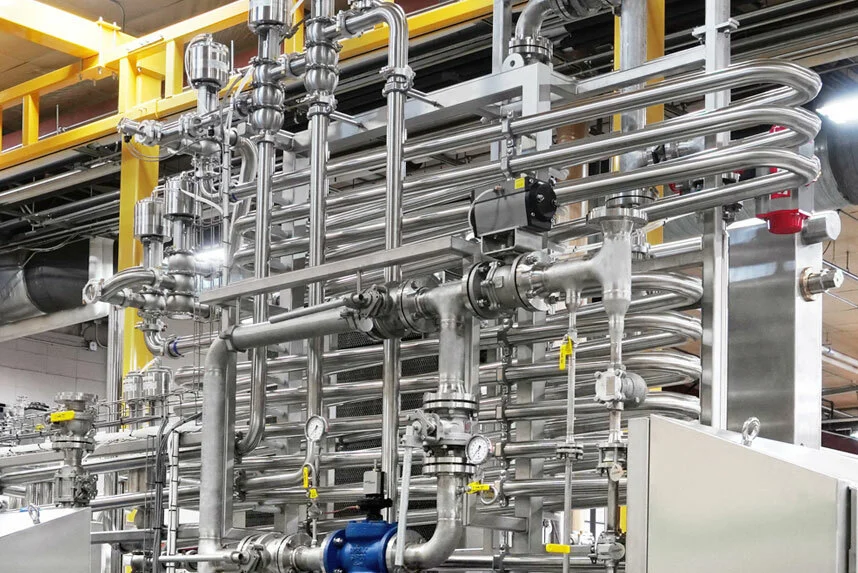
Pipeline Construction Projects in Saudi Arabia: Opportunities for EPC Contractors Saudi Arabia continues to invest heavily in energy infrastructure as part of Vision 2030, creating significant demand for large-scale pipeline construction projects. With the expansion of oil, gas, water, and industrial sectors, EPC contractors are presented with long-term opportunities across the design, construction, maintenance, and rehabilitation of pipeline networks. These projects are critical to supporting upstream, midstream, and downstream operations while ensuring safe and efficient energy transportation across the Kingdom. Growing Demand for Pipeline Infrastructure Saudi Arabia operates one of the world’s largest pipeline networks, transporting crude oil, refined products, gas, and industrial fluids across vast distances. The increasing need for energy diversification, refinery upgrades, petrochemical expansion, and desalination plants is driving new pipeline construction and modernization initiatives. As a result, Industrial Pipeline Services in Saudi Arabia are experiencing strong growth, particularly for high-pressure, corrosion-resistant, and technologically advanced pipeline systems. EPC contractors with experience in large-scale infrastructure are well-positioned to support national oil companies, private industrial operators, and government-backed mega projects. From cross-country pipelines to complex plant piping systems, demand remains consistent and resilient. Role of EPC Contractors in Pipeline Projects EPC contractors play a crucial role in delivering pipeline projects from concept to commissioning. Their scope typically includes engineering design, material procurement, construction, testing, and handover. A reliable Pipeline Contractor in Saudi Arabia must comply with strict safety standards, environmental regulations, and international engineering codes while managing projects efficiently in challenging terrains and climatic conditions. Additionally, contractors are expected to provide value-added services such as route surveys, trenching, welding, coating, hydrotesting, and cathodic protection systems. This integrated approach ensures long-term pipeline integrity and operational reliability. Importance of Maintenance and Rehabilitation Beyond new installations, Oil Pipeline Maintenance in Saudi Arabia is a major segment offering sustained opportunities for EPC and service contractors. Aging pipeline infrastructure requires regular inspection, corrosion control, leak detection, and repair to meet safety and environmental standards. Maintenance contracts are often long-term and performance-based, making them attractive for experienced contractors. Advanced technologies such as intelligent pigging, real-time monitoring, and non-destructive testing are increasingly being adopted. Companies that combine construction expertise with maintenance capabilities can gain a competitive edge in the Saudi market. Industrial and Plant Piping Opportunities In addition to cross-country pipelines, industrial plants such as refineries, petrochemical complexes, power stations, and desalination facilities require extensive internal piping systems. Acting as a Piping Contractor in Saudi Arabia, EPC firms are responsible for fabricating and installing complex piping networks that handle high temperatures, pressures, and corrosive media. These projects demand precision engineering, skilled manpower, and strict quality control. Contractors offering fabrication yards, modular construction, and fast-track execution are particularly valued in time-sensitive industrial developments. Selecting the Right Pipeline Services Partner Clients increasingly seek a reliable Pipeline Services Company in Saudi Arabia that can offer end-to-end solutions, including engineering support, construction, inspection, and maintenance. Strong local presence, compliance with Saudi Aramco and SABIC standards, and a proven safety record are key factors in contractor selection. Companies providing Core Contracting Services in Saudi Arabia—such as civil works, structural fabrication, mechanical installation, and pipeline construction—are especially attractive as they reduce coordination risks and improve project efficiency. Future Outlook for EPC Contractors The outlook for pipeline construction in Saudi Arabia remains highly positive. Ongoing investments in oil and gas, hydrogen, carbon capture, and water infrastructure will continue to generate demand for qualified EPC contractors. Sustainability and digital transformation are also shaping project requirements, encouraging contractors to adopt innovative materials, smart monitoring systems, and environmentally responsible construction methods. For EPC firms aiming to expand or strengthen their presence in the Kingdom, aligning with national development goals, investing in skilled workforce development, and delivering high-quality pipeline solutions will be essential for long-term success.